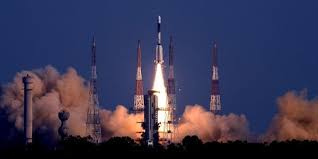
India will soon allow overseas companies to invest in the space sector with a revised foreign direct investment FDI policy, taking the next step in opening up the sector to not only private players within the country but also abroad. India will set targets to increase its share in the global space economy from less than 2% at the moment to 10%, said Dr Pawan Goenka, the newly appointed chairperson designate of the Indian National Space Promotion and Authorisation Centre INSPACe, the body responsible for promoting and regulating space activity in the country.
World Space Week 2021 In India
● The Society for Space Education Research and Development SSERD, a research institute in Bengaluru, is organising an Outreach Program from October 4 to October 17, which will include World Space Week celebrations in India and other countries.
● SSERD Outreach Program 2021 aims to connect more than 1 million space enthusiasts, and includes celebrating World Space Week for seven days, from October 4 to October 10, and Outreach activities from October 11 to October 17, for school students, undergraduates, teachers and the common public globally, to provide them knowledge about space, science, and technology.
● Vikram Sarabhai Space Centre, Liquid Propulsion Systems Centre, and Indian Space Research Organization ISRO Inertial Systems Unit started World Space Week celebrations in India with an inaugural programme on Monday.
Size of India’s space economy
The current global space economy is pegged at USD 360 billion. The Indian space economy is valued at USD 7 billion, which is around 2% of the global space economy. The Indian space sector needs to grow at ~approximately 48% CAGR over the next five years to reach its target of USD 50 billion.
Challenges for the Indian space sector
● The absence of a national space legislation leads to a lack of clarity on conducting space-related business activities in the country.
● There is a lack of awareness about the demands of the global space industry.
● Lack of established regulatory framework and guidelines for technology commercialisation and funding in the Indian space sector result in a dearth of private investment.
Space Sector Reforms
In 2020, the Union Cabinet approved the draft legislation that enabled the private sector to participate or undertake a range of space activities, such as building developing rockets and satellites, providing launching services and owning satellites. Through this new draft, private businesses will be able to carry out R D activities, collaborate with ISRO on various science and interplanetary missions and use ISRO’s facilities. These reforms will be implemented by a new nodal agency, the Indian National Space Promotion and Authorisation Centre IN-SPACe, and while ISRO’s commercial activities will be delegated to government-owned units.New Space India Ltd. NSIL and Antrix, leaving the organisation to focus on R D, scientific missions and space exploration. Also, the NSIL will reorient its space activities from a ‘supply-driven model’ to a ‘demanddriven model’ and ensure optimum utilisation of space assets.
Women In Space. Meet The Indian Women Astronauts Who Made History
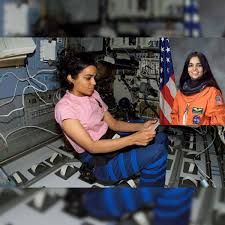
Kalpana Chawla . – Kalpana Chawla was the first IndianAmerican astronaut. She obtained a PhD in aeronautical engineering from the University of Colorado, Boulder, after receiving two master’s degrees. She joined NASA as a researcher shortly after graduating in 1988. Kalpana Chawla was chosen as an astronaut candidate by NASA in December 1994 and reported to the Johnson Space Center in March 1995. She was assigned to the Astronaut Office’s Crew Systems and Habitability section in January 1998 as a crew representative for shuttle and station flight crew equipment and later served as the section’s lead. She spent 30 days, 14 hours, and 54 minutes in space on STS-87 1997 and STS-107 2003 missions. In the Columbia space shuttle tragedy in 2003, Kalpana Chawla succumbed. The shuttle exploded 16 minutes before its intended touchdown over Texas upon re-entry into Earth’s atmosphere.
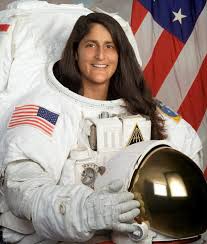
Sunita Williams :- Sunita Williams became the second woman of Indian descent to fly to space, following in Chawla’s footsteps. In July 1989, she became a Naval Aviator after joining the Naval Aviation Training Command. When Williams was chosen for the astronaut programme, she was stationed on the USS Saipan. She has accumulated over 3000 flying hours in a variety of aeroplanes.NASA selected her as an astronaut in June 1998, and she reported for training in August of that year. In 2006, the halfIndian astronaut flew for the first time, spending 195 days on the International Space Station ISS . In 2012, she also worked as a flight engineer on the International Space Station ISS . Williams was one of four astronauts chosen in 2015 to fly the first test missions in NASA’s Commercial Crew programme, which will see two new commercial crewed spacecraft, SpaceX’s Crew Dragon and Boeing’s CST-100 Starliner, transport astronauts and cargo to the International Space Station. Williams has spent a total of 322 days in space on two missions, putting her in second place for female endurance in the United States. She is the second-longest spacewalk by a female astronaut, with a total of 50 hours and 40 minutes.

Sirisha Bandla :- Sirisha Bandla, an Indian-born American, will be boarding Virgin Galactic’s Richard Branson’s VSS Unity, which will launch into space from New Mexico on July 11, 2021. After Kalpana Chawla, the 34-year-old aeronautical engineer from Purdue University, will be the second Indian-American woman to fly into space. Sirisha Bandla was raised in Houston, Texas, and was born in Guntur, Andhra Pradesh.Sirisha holds a Master of Business Administration from Georgetown University and is a Purdue University graduate. As an aerospace engineer, she worked for the Commercial Spaceflight Federation CSF and L-3 Communications in Greenville, Texas, on space policy. Sirisha will be the second Indian-born woman in space, joining Rakesh Sharma, Kalpana Chawla, and IndianAmerican Sunita Williams as the fourth Indian.As the first woman astronaut Valentina Tereshkova said, A bird cannot fly with one wing only. Human space flight cannot develop any further without the active participation of women. The advent of space missions has reached an unprecedented level since then, and the near future looks bright for aspiring women space travellers of the world.
Source :-
https. news.abplive.com science world-space-week-2021-themewomen-in-space-historysignificance-and-eventscelebration-plan-by-india-andworld-1486043 https. http://www.hindustantimes.com indianews india-to-open-space-sectorfor-foreign-investment-target-10of-global-marketshare-101631558791899. html https. http://www.ibef.org blogs enhancing-private-sectorparticipation-in-india-scommercial-space-sector
 Open Opinion.art
Leave a comment