
All kinds of art became under the threat of Hindutva in India. The recent example is three advertisements that have been banned in India in the same month of October. How did it become a threat? As we all know all kinds of art means they are giving footprints of that society or that era. Which means all art has a great history of that time. Likewise our advertisements also started to change in their content according to the time. But unfortunately the Indian political social situation has changed after 2014. The impact is visible in all kinds of art, freedom of speech and expression and the people are under hail for various reasons.At the same time some of the ads are banned in India by the good intervention also. Which helps to stop some of the Orthodoxical and conventional. But Here giving some examples of what the advertisements in India banned recently and some of the banned ad history in both ways.

Dabour fame Cream :- An advertisement showing a same-sex couple celebrating the festival of Karva Chauth rolled out by consumer goods major Dabur for their product Fem Creme bleach has prompted mixed reactions on social media. The commercial shows two young women gleefully preparing for their first Karva Chauth, while one is applying bleach on the other’s face.
The commercial shows two young women gleefully preparing for their first Karva Chauth, while one is applying bleach on the other’s face.
Both the women are seen discussing the importance of the festival and the reason for celebrating it. Another woman joins the two and gives each one of them a saree to wear for the night.
The Dabur ad was considered offensive by a Minister for offending Hindu sentiments as it featured a same-sex couple celebrating Karva Chauth. Dabur promptly withdrew the ad and also offered an apology which seems to be the norm for brands.
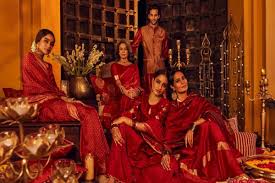
FabIndia:- Fabindia was trolled on social media for “unnecessarily uplifting secularism” and hurting religious sentiments by ‘defacing’ a Hindu festival using an Urdu phrase for a festive collection. The company was forced to withdraw its advertisement, the collection, and Fabindia issued a statement saying that the collection was not a Deepavali collection, and that its actual Deepavali collection will be called ‘Jhilmil si Diwali’ (twinkle-like Diwali). Fabindia gave into pressure, despite the fact that Urdu is an Indian language. Another day, another brand succumbing to pressure, because the notion ‘bad publicity is also publicity’ is not that popular when Members of Parliament also join the calls for a boycott.
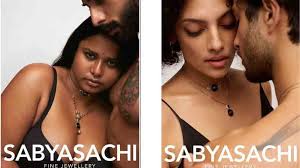
Sabyasachi :- After facing severe backlash, designer brand Sabyasachi has finally withdrawn its controversial Mangalsutra advertisement campaign, saying it was “deeply saddened” that it has offended a section of society. The controversial advertisement portrayed a woman wearing a low-neckline dress and posing solo and in an intimate position with a man. The popular designer brand has been facing flak on social media platforms as well as from leading politicians over the controversial Mangalsutra ad campaign.
Sabyasachi decided to take down the ad came hours after Madhya Pradesh Home Minister Narottam Mishra issued a 24-hour ultimatum asking them to withdraw the advertisement which has an “objectionable and obscene” portrayal of Mangalsutra or else face statutory action.

CEAT tyre controversy :- by tyre manufacturer CEAT Ltd., starring Bollywood actor Aamir Khan has landed in a soup. Taking offence, Karnataka Bharatiya Janata Party (BJP) MP Ananth Kumar Hegde has written a sarcastic letter to Anant Vardhan Goenka, MD and CEO of the Mumbai-based company, hoping that ‘CEAT will respect the feelings of Hindus in future and will not hurt them as such advertisements are creating unrest among Hindus’. The letter dated October 14 has gone viral on social media after it was uploaded on Hegde’s official Facebook page
Last year Tanishq was the first advertisement that came under threat. and going by how things are shaping up, definitely won’t be the last brand to succumb to public pressure and withdraw a campaign in the wake of outrage. As one sees below, in some cases the brand’s intent was good but social outrage pushed them to act.
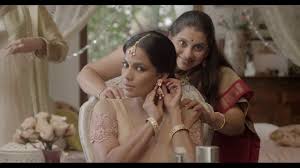
Tanishq :- The ad for ‘Ekatvam’ jewellery released October 9 showed a Muslim family organising a baby shower (goad bharai) for their Hindu daughter-in-law who is pregnant. Describing the ad as “a beautiful confluence of two different religions, traditions, cultures”, Tanishq showcased this spirit under their official YouTube video, which has since been taken down: “She is married into a family that loves her like their own child. Only for her, they go out of their way to celebrate an occasion that they usually don’t. Those criticising the ad said it endorsed “love jihad”, which is known in right-wing circles as a method used by the Muslim community to induct Hindu women into their religion through means of marriage or love, leading to conversion. Following the ad’s release, Titan and Tata, the parent companies behind Tanishq, also faced heat with people calling for a boycott of other Tata brands like Voltas and Starbucks.

Kent RO:- Recently in May, in the wake of sanitation advisories around coronavirus, water purifier Kent RO put out an ad graphic that immediately drew flak for class discrimination. The still endorsement, advertising the brand’s Atta Maker and Bread Maker, showed a pair of hands kneading dough, with the caption: “Are you allowing your maid to knead atta dough by hand? Her hands may be infected.”
The ad had evident classist overtones, as social media users pointed out, saying that it was horrible of the brand to imply that house helps (who primarily belong to economically weak sections) were susceptible to poor hygiene and the virus. Many even called out the brand’s use of the term “maid” which is perceived to have derogatory connotations. Following social media backlash, Kent apologised and pulled the ad down.
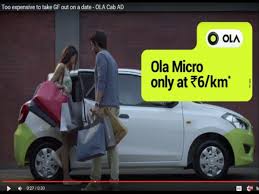
Ola: – Ola’s 2016 ad titled “Micro Stories: Too expensive to take GF out on a date?” showed a couple roaming the market, with the woman halting to shop at every store, much to the “chagrin” of her boyfriend. He turned to the camera and apparently said, “Meri girlfriend chalti hai ₹ 525 per km, but Ola Micro chalti hai sirf ₹ 6 per km,” (It costs me ₹ 525 per km when my girlfriend walks but Ola Micro runs at just ₹ 6 per km).
The ad was criticised for being sexist, reinforcing the age-old trope of women causing annoyance to men, given their generalised penchant for shopping. Ola pulled the ad down, but not without a snarky jibe: “We understand one of our TVCs has ended up hurting some sentiments. We’ve pulled it down. However, #OlaMicro continues to run at Rs.6/km.”
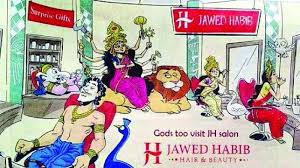
Jawed Habib :- Hairstylist and businessman Jawed Habib, who runs hair salons across India under his banner, stirred controversy when he released an ad with religious symbolism around the time of Durga Puja. The 2017 newspaper ad showed various gods from Hindu mythology – Durga, along with her children Kartik, Lakshmi, Saraswati, and Ganesh – having a spa day at Jawed Habib’s. The caption read: “Gods too visit JH salon.”
The visuals of gods engaging in vanity, putting on make-up, and counting money drew flak from netizens who accused Habib of targeting gods of the religion he himself didn’t abide by. What’s more, a Habib salon was also vandalised in Uttar Pradesh owing to the outcry. Habib had later issued a video apology on social media for his ad, which was not reprinted in circulations after.

Zomato :- Zomato, known for its quirky branding, perhaps had too much fun with one of its ad campaigns that eventually became cause for public outrage. For one of their OOH ads displayed across hoardings and banners in Delhi-NCR, the food delivery app had positioned the letters “MC. BC.” in bold, with tinier lettering beneath that read “mac n’ cheese” and “butter chicken.” The audience and several social media users did not take to the ad kindly, since MC BC expands into Hindi expletives generally understood as crass.
After outrage chiefly manifested on social media, the hoardings were taken down and the brand apologised. Various other ad moguls also criticised the use of such an ad, saying it was in poor taste.
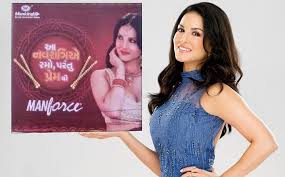
Manforce:- A 2017 ad by Mankind Pharma, the company that manufactures Manforce condoms, was caught in controversy when it reportedly put up close to 500 public hoardings in Gujarat, featuring condom use themed around the Navratri festival. The product, advertised by actor Sunny Leone, displayed her as the poster face with the caption “play safe”, ahead of the nine-day festival. While, the ad intended to promote safe sex, many took it to be a desecration of the festival’s sanctity and promotion of undue sexual intimacy during that specific period.
Public protests ensued and led by the Confederation of All India Traders campaigned to have the ad pulled down from over Gujarat. Manforce later expressed regret, and said the ad “was not meant to hurt sentiments.”

Jack & Jones India:- A 2016 ad for Jack & Jones India featuring Bollywood star Ranveer Singh drew a lot of flak from the audience and the actor himself for its sexist messaging. Across 12 cities, the international brand’s India chapter had put up hoardings that showed Singh carrying a skirt-clad woman over his shoulder, with a caption that read: “Don’t Hold Back, take your work home.” It was supposedly an ad for an office shirt, but social media users did not miss the tool of objectification of women used.
The company later pulled down their hoardings after mass outrage on social media, and Singh even went on to say, “It was important to give the brand creative freedom while designing their campaign, but I guess we got it wrong on one of those billboards and I’m sorry this happened but it’s a thing of the past… we rectified it immediately by having those hoardings taken down asap.”

Set Wet:- Indian deodorant ads are known for being stereotypically raunchy with an overload of problematic character tropes of women falling for men because they smell good. A fairly older television ad by Set Wet Zatak fell into similar controversy some years back for selling this idea. It showed a newly married woman waiting on the night of suhaag raat for her husband, when she catches the scent of the neighbour next door, a well-built man applying the deodorant being sold. They lock eyes and we next see her take off her ring in a bid to engage with him sexually on the night of her marriage.
This ad by Set Wet aired for a while but faced outraged reactions from Indian viewers. It was soon pulled down by the Advertising Standards Council of India that deemed it inappropriate for viewing. Alongside, ASCI has also reportedly banned other similar “obscene” ads from deo brands Axe and Wildstone.
Here are a few ads made for Indian television but censors though was inappropriate to be played for TV audiences.

Mr Coffee Advertisement (Early 90’s)
The advertisement for the coffee brand, Mr Coffee, made headlines for then real-life couple, Arbaaz and Malaika’s onscreen chemistry. ‘Real pleasure can’t come in an instant’ was the tagline for the commercial as expected was sensuous. The commercial had an inclination towards sexual fantasy and was not well received in India. As a result, it was pulled down.

Kamasutra Condom Advertisement (1991)
Actress Pooja Bedi and Marc Robinson’s Kamasutra Condom commercial released in 1991. The ad showed the two of them under a shower. But this commercial was banned by Doordarshan for hurting the sensitivities of family-oriented audience.
Amul Macho Advertisement (2007)
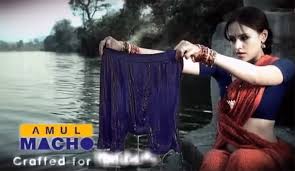
Sana Khan became instantly famous for her act as Amul Macho’s ‘toing’ girl. The commercial featured Sana as a wife who fantasises about her husband while washing his Amul Macho undergarment. The commercial aired on national television, during regular shows. But it was reportedly considered so offensive that it had to be banned.
New York Lotto Advertisement (1999)
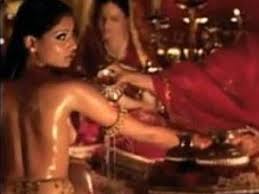
Famous for her hot body, curves and dusky charm, Bipasha Basu has always been on top of the charts. Even before the Bengali actress took Bollywood by storm, the actress had shed it all for an advertisement. In a commercial for New York Lotto, the Raaz 3 actress had shed all her clothes. She had featured with Vivek Oberoi in the advertisement. The commercial was meant for the international audience and was reportedly banned in India due to its bold content.

Wild Stone Deo Advertisement (2007)
The commercial displayed a traditional Bengali woman during Durga Puja celebrations. The fragrance of a man’s deo attracts her towards him, and you can guess what happens next. Although this ad was not banned, a highly censored version was telecast on television.
Source :https://www.shethepeople.tv/home-top-video/8-ads-by-notable-brands-that-were-taken-down-after-public-outrage/
https://newsable.asianetnews.com/gallery/weird-news/banned-on-tv-ads-that-were-considered-inappropriate-to-go-on-air-gps-qi4y2u#image1
https://indianexpress.com/article/cities/bangalore/ananthkumar-hegde-tyre-company-ad-featuring-aamir-khan-hurting-sentiments-7583666/
https://truecopythink.media/index.php/intolerant-hindutva-brigade-campaign-against-advertisements
https://theprint.in/india/now-bjp-mp-taunts-ceat-tyres-for-aamir-khan-ad-saying-burst-crackers-but-not-on-road/754588/
https://zeenews.india.com/india/sabyasachi-withdraws-controversial-mangalsutra-campaign-advertisement-after-backlash-2407089.html
https://www.shethepeople.tv/home-top-video/8-ads-by-notable-brands-that-were-taken-down-after-public-outrage/
https://newsable.asianetnews.com/gallery/weird-news/banned-on-tv-ads-that-were-considered-inappropriate-to-go-on-air-gps-qi4y2u#image1
 Open Opinion.art
Leave a comment